

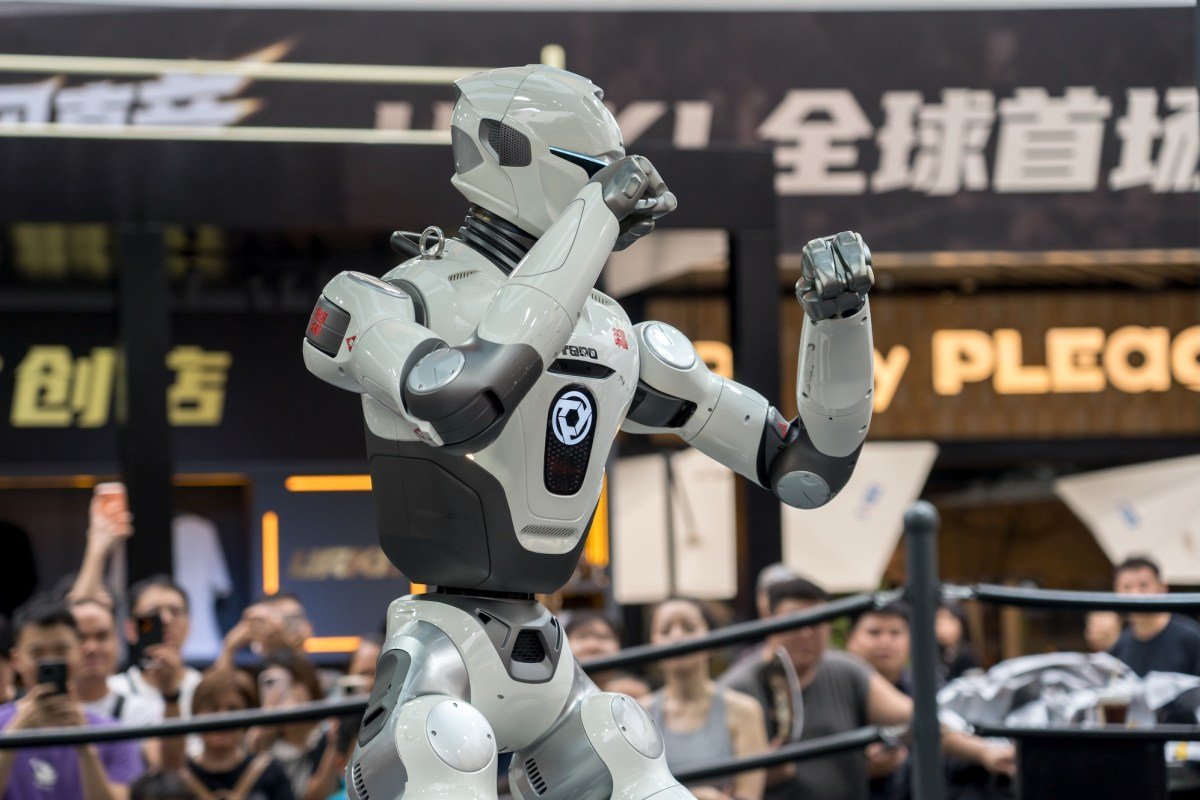
The Trump administration banned imports of new foreign-made humanoid robots, robot dogs, and solar power inverters into the United States on Tuesday, citing severe national security and cyber-surveillance risks posed primarily by Chinese manufacturers.
Why the FCC is blocking foreign robotics and energy tech
The U.S. Federal Communications Commission (FCC) announced the ban after identifying critical vulnerabilities in these imported technologies. According to the regulator, devices manufactured overseas can be remotely hijacked, manipulated for espionage by foreign states, or weaponised to launch large-scale cyberattacks against American infrastructure.
However, the restriction is not entirely absolute. The FCC noted that import exceptions may be granted if developers can conclusively prove their hardware poses no threat to U.S. national security.
Beijing, espionage, and the threat of cyber warfare
This regulatory crackdown stems from long-standing concerns in Washington regarding state-sponsored espionage. American intelligence agencies have frequently accused Beijing of hacking domestic businesses to steal intellectual property and preparing disruptive cyberattacks to support its geopolitical goals, including a potential invasion of Taiwan.
U.S. officials argue that foreign ownership alone presents a systemic risk, as Beijing possesses the legal authority to compel domestic firms to spy on American citizens or disrupt critical hardware functions remotely. Notably, the U.S. government holds similar legal powers within its own jurisdiction.
How the ban impacts humanoid robots and solar energy
The emerging humanoid robotics market
Humanoid robots—machines designed to mimic human movement and tasks—remain in the early stages of commercial development. Global shipments reached around 15,000 units in 2025, with the market heavily dominated by two major Chinese manufacturers who account for the majority of these exports.
Solar power inverters and residential energy
In contrast to experimental robotics, power inverters are already widely integrated into American homes, serving as critical links between residential solar arrays, renewable energy systems, and the national grid. The FCC clarified that the new import restrictions will not affect existing inverters already installed in households and commercial properties.
A growing list of banned Chinese technology
This latest executive action follows a series of aggressive trade and security measures targeting Chinese technology. Previous interventions include the forced divestment of TikTok to American investors, bans on foreign-manufactured consumer routers, and blacklisting surveillance giants Hikvision and Dahua over their involvement in human rights violations.
Beijing has strongly condemned the FCC’s decision. A spokesperson for the Chinese Foreign Ministry, quoted by the Associated Press, declared that China would deploy “all measures necessary” to shield its domestic industries from foreign restrictions.
This trade dispute unfolds ahead of a highly anticipated diplomatic event, with Chinese President Xi Jinping scheduled to meet President Donald Trump in Washington, D.C., during an official state visit this September.