

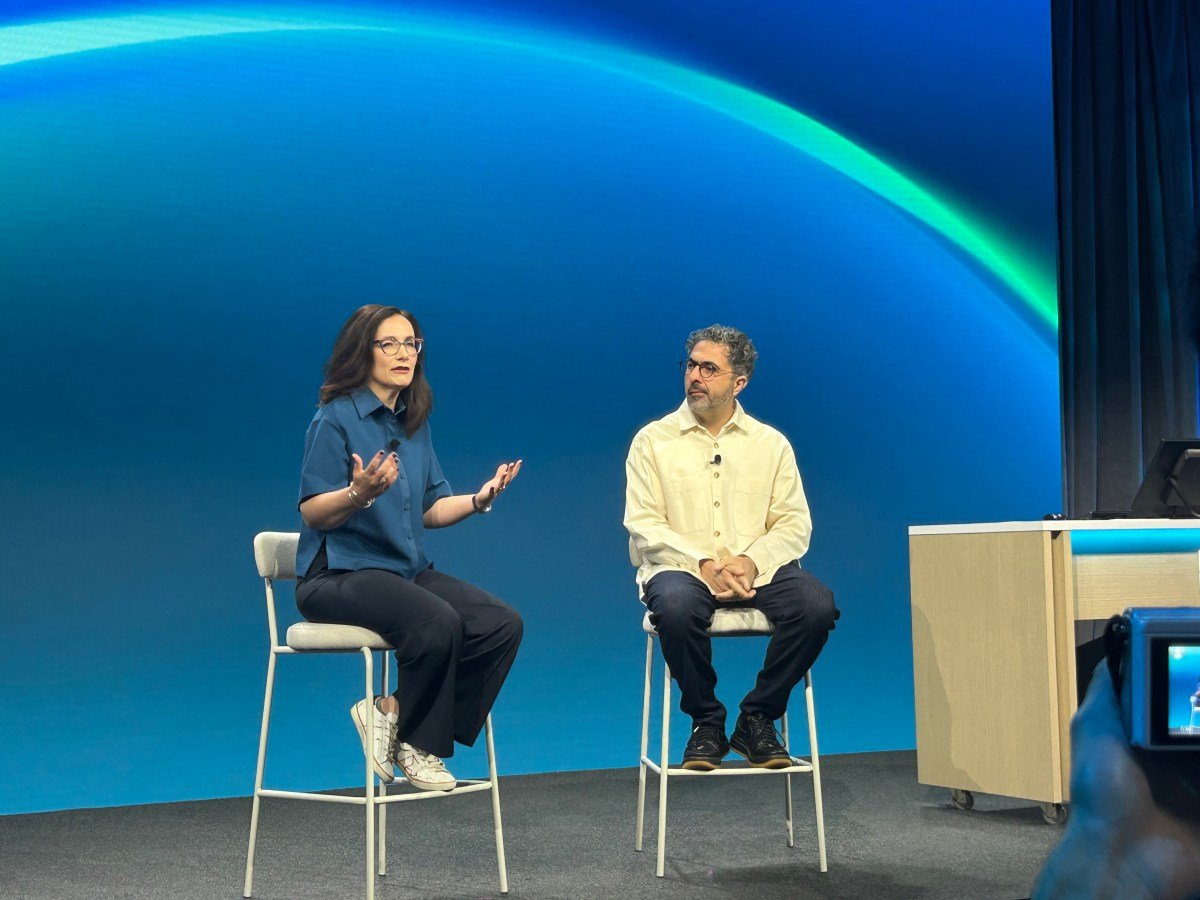
Microsoft launched its first specialised cybersecurity model, MAI-Cyber-1-Flash, alongside its new “Perception” security platform on Monday at a San Francisco event to challenge rivals Google, OpenAI, and Anthropic in the AI-driven defence market.
Powering Vulnerability Detection with MAI-Cyber-1-Flash
The tech giant designed MAI-Cyber-1-Flash specifically to identify complex vulnerabilities within intricate codebases. This model serves as the engine for MDASH, Microsoft’s proprietary harness built for software vulnerability identification and remediation.
According to Microsoft, MAI-Cyber-1-Flash delivers superior performance and greater cost-efficiency than rival models on established AI cybersecurity benchmarks.
“We’re very, very excited to announce our results,” stated Mustafa Suleyman, co-founder of DeepMind and current CEO of Microsoft AI. “We have MAI-1 Cyber Flash binded with GPT 5.4 inside of the MDASH harness — which beats out Gemini, GPT 5.5 Cyber, GPT 5.6 Sol, and Mythos 5 on Cyber Gym, which is the primary benchmark that we all use. The golden benchmark.” Suleyman confirmed that the system is entering production immediately.
Perception: Agentic Teams Combating AI Threats
The newly unveiled security platform, named Perception, is engineered to deploy teams of agents to automate and assist with critical security workflows, including bug detection and remediation. Perception also integrates directly with the MDASH harness.
As cybercriminals increasingly leverage artificial intelligence to execute attacks, Hayete Gallot, Microsoft’s Vice President for Security, framed Perception as a vital shield, enabling enterprise defenders to fight AI with AI at the precise speed and scale of modern attackers.
var playerInstance_jwplayer_6a7a0610a2ab6 = jwplayer( “jwplayer_6a7a0610a2ab6” );
playerInstance_jwplayer_6a7a0610a2ab6.setup({
playlist: “https://cdn.jwplayer.com/v2/media/lv0GaEwB”,
});
How Red, Blue, and Green Teams Work
Perception operates using agentic red, blue, and green teams. The red teams run detailed simulations of potential cyberattacks to provide deep context on threat actors and likely exploits. Blue teams focus on detecting and triaging active bugs, whilst green teams execute swift corrective actions to patch those vulnerabilities.
Dave Weston, lead engineer for Perception, highlighted the platform’s ability to streamline operations for corporate security teams. “We’ve gone from this taking hours and hours of manual work from multiple specialised folks across the security organisation — appsec hunters, remediation engineers, you name it — and in minutes, we have a fix for all of this. Not only do we discover the issues and prioritise them, but we have detection, posture fixing, and even a code fix.”
A Crowded AI Security Landscape
While AI equips enterprises with advanced defensive capabilities, its widespread availability to malicious actors has simultaneously generated a highly sophisticated threat landscape.
Microsoft’s new tools, set to launch in preview on November 3, enter a highly competitive market. Earlier this year, Anthropic introduced Mythos, a security platform rolled out to select partner organisations via its Glasswing programme. OpenAI also launched its own security offering, Daybreak, in May.