

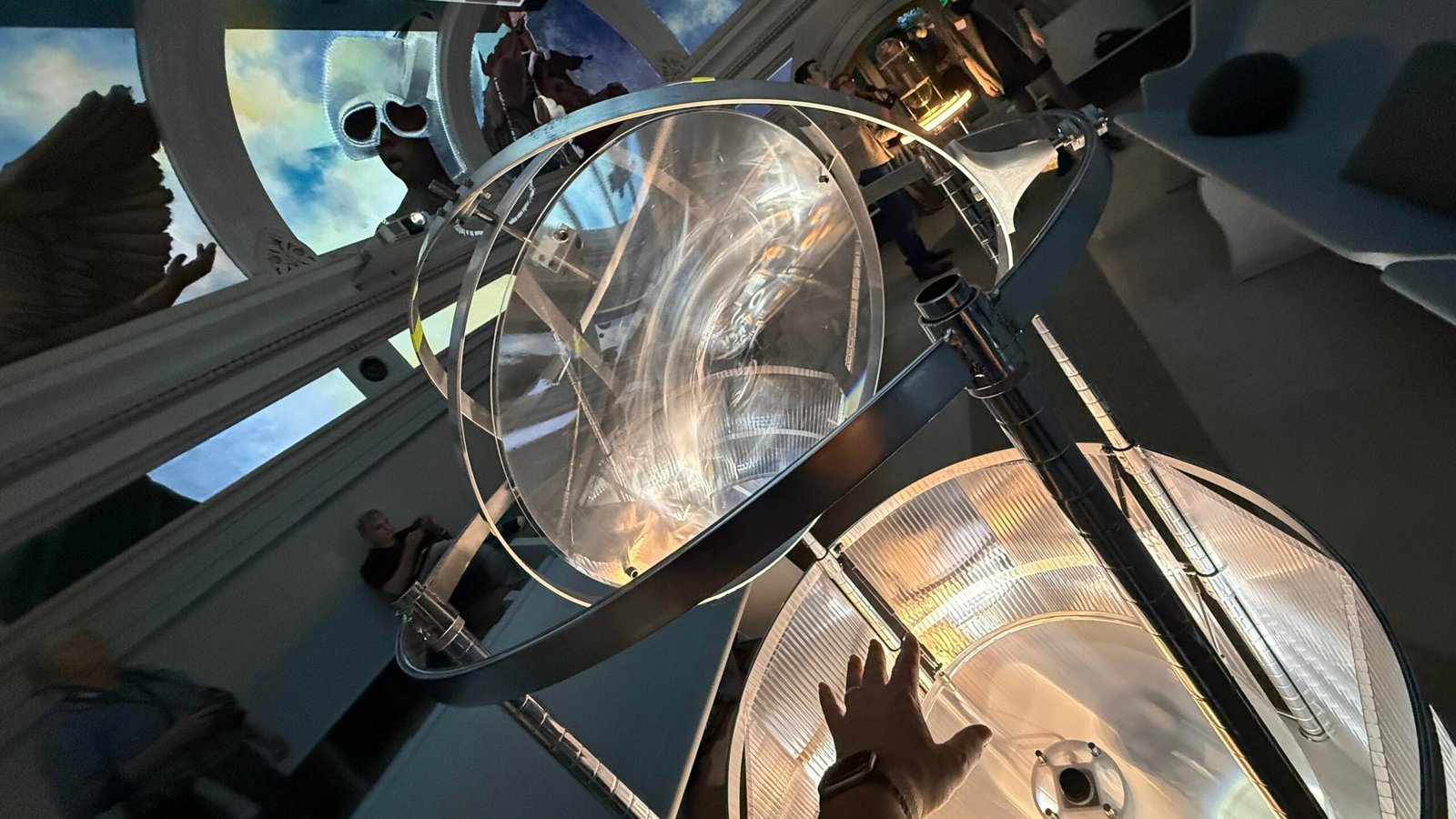
A historic former bank building in Philadelphia has been transformed into the Ministry of Awe, a massive six-story immersive art installation created by muralist Meg Saligman and over 100 artists that integrates subtle artificial intelligence to redefine how visitors interact with physical art ahead of its highly anticipated public opening.
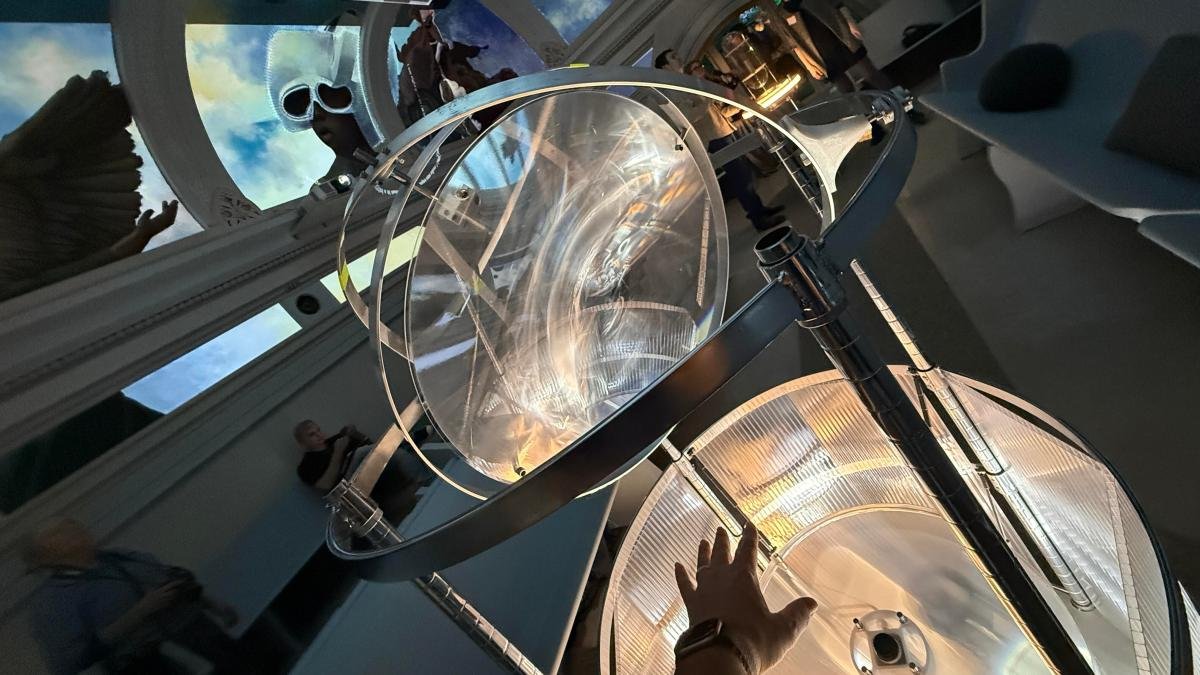
Interacting with an instrument tracking my hands in a room at the top of Ministry of Awe in the Heavens exhibit.
Scott Stein/CNET
Ascending the staircases of this repurposed financial institution reveals a labyrinth of surrealist exhibits, including subterranean passages guarded by mythical “skin horses” and rooms filled with curious keepsakes. At the peak of the building, a massive domed ceiling features a sprawling art mural that guests can explore using digital instruments. By speaking into a nearby microphone, visitors watch their words crawl along the architecture, while inserting hands into a specialized tracking chamber projects their movements onto the ceiling, triggering real-time AI-generated descriptions of the painted details.
A Multi-Sensory Exploration of Power and Data
This provocative new venue offers East Coast art lovers a distinct dose of surrealism reminiscent of Meow Wolf, Los Angeles’ Museum of Jurassic Technology, or London’s historic Sir John Soane’s Museum. The converted bank building serves as an interactive playground where narrative secrets are hidden in desk drawers, rotary phones ring with mysterious messages, and restrooms record audio “deposits” from guests. While the entire exhibit critiques the historical authority and influence of financial institutions, the seamless integration of modern technology remains one of its most compelling features.
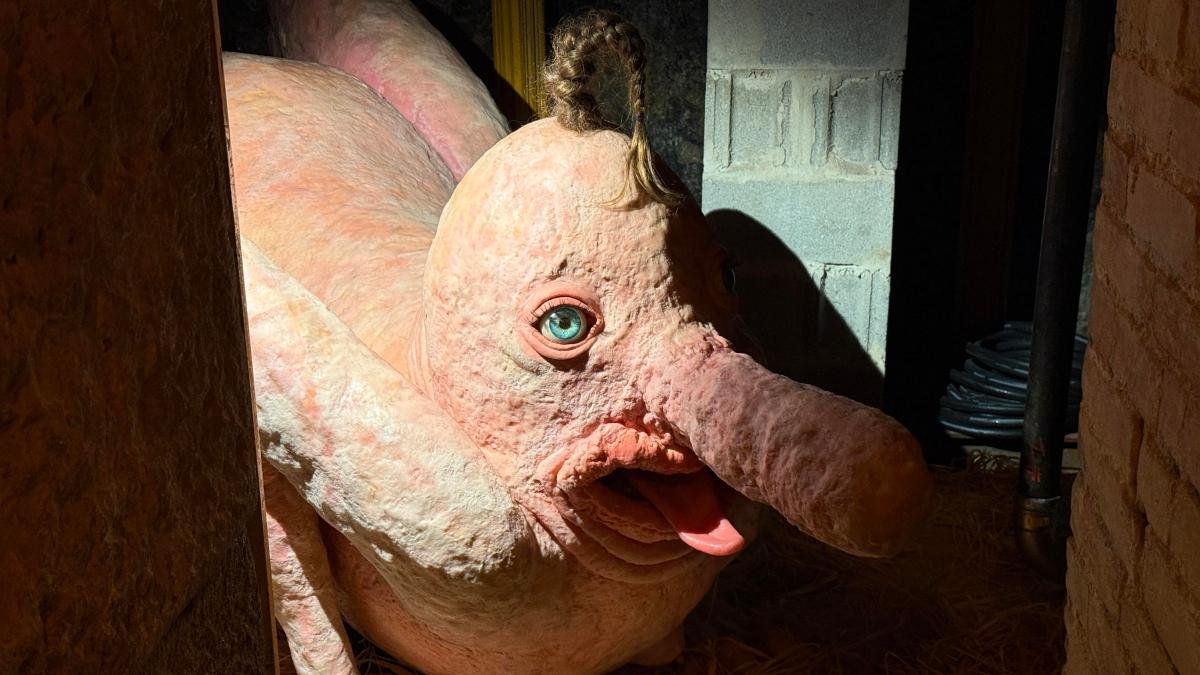
This “skin horse” lurks in the basement, if you look hard enough.
Scott Stein/CNET
How Spatial Computing Enhances Physical Art
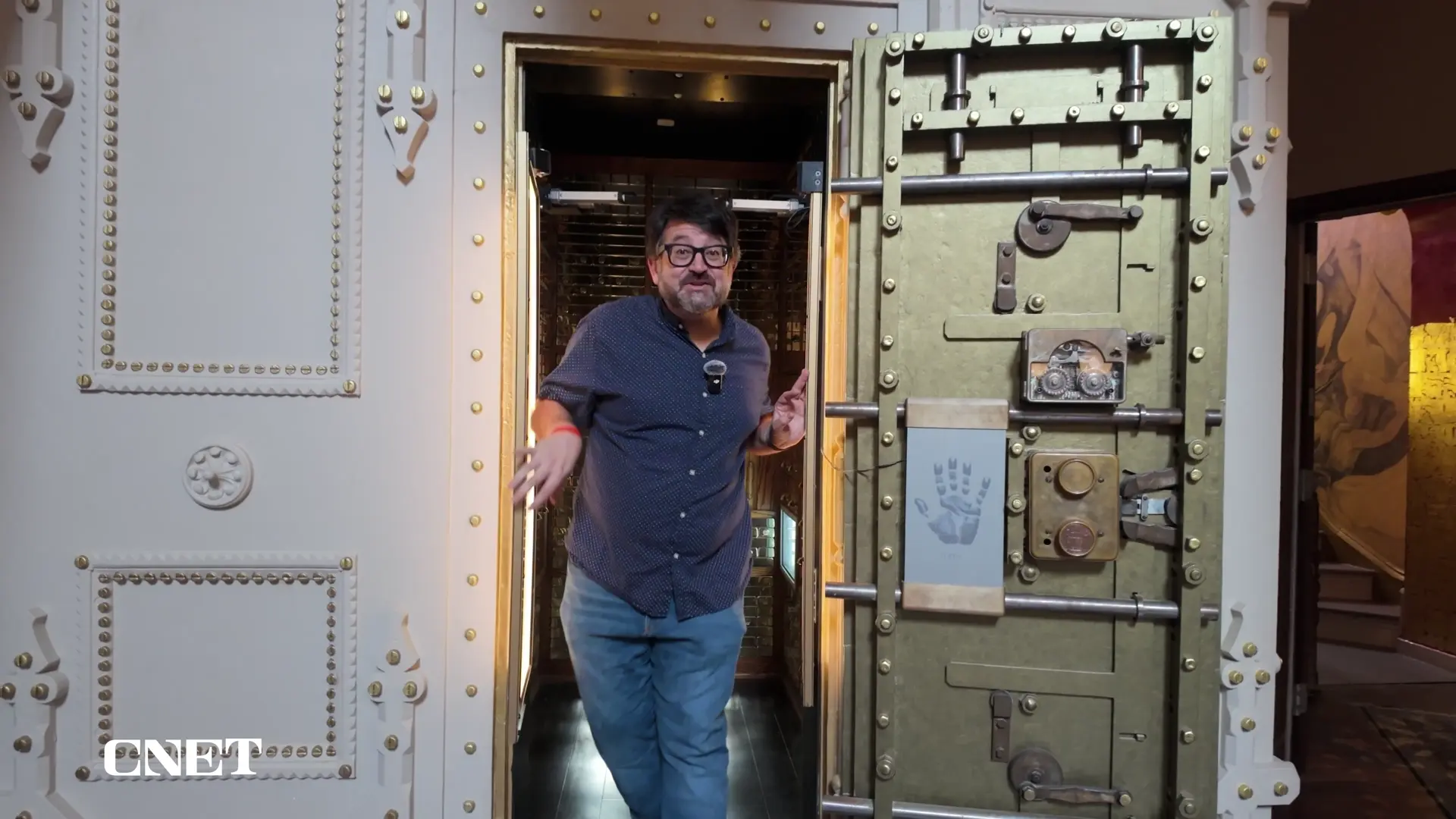
Rather than using artificial intelligence to generate new images or replace human creativity, the Ministry of Awe utilizes technology to highlight and contextualize physical masterpieces. This approach mirrors discussions surrounding tech-art integration at major industry events like SXSW. The crown jewel of the installation is “The Heavens,” a majestic fifth-floor mural designed by Saligman. Visitors can view the projection from angled lounge chairs or interact with the space using specialized digital instruments developed by the technology firm Spatial Pixel.
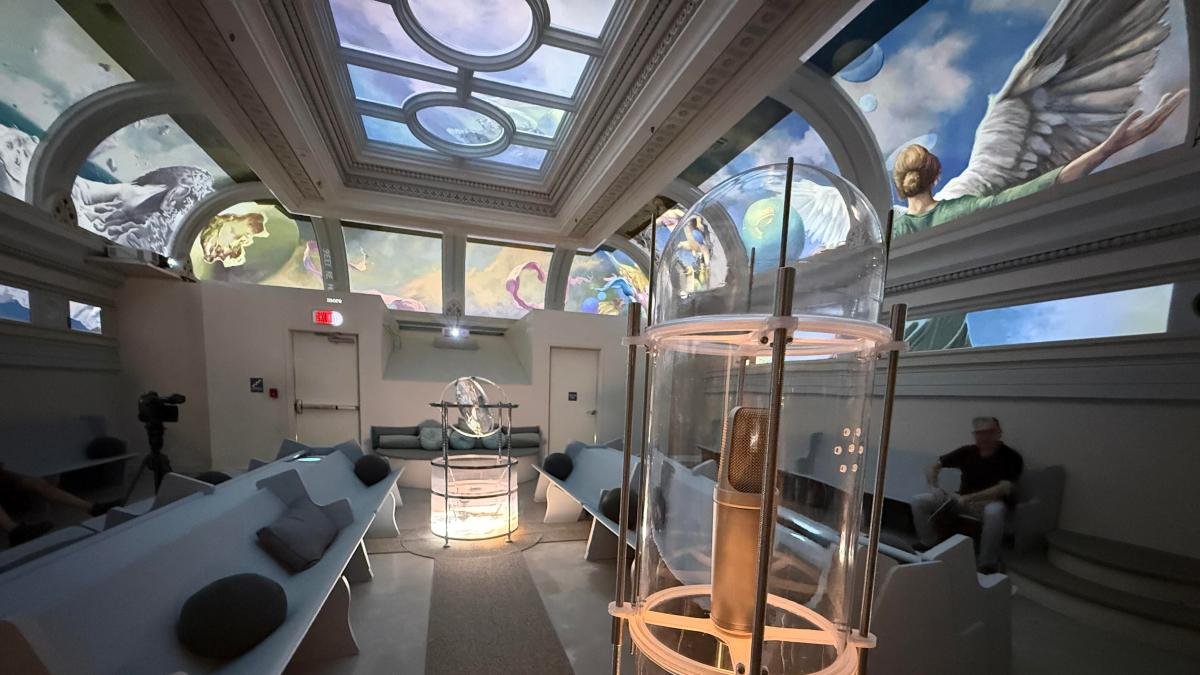
A full look at the projector-filled room where the Heavens mural exists, along with interaction instruments. This is just one room of many in the Ministry.
Scott Stein/CNET
Spatial Pixel, co-founded by architect William Martin and Violet Whitney—former product director at Google Sidewalk Labs—specializes in “spatial computing for spaces, not faces.” Both founders also teach spatial AI at Columbia University, bringing academic rigor to this public art experiment.
Exploring AI through art
The interactive elements within “The Heavens” are designed to feel organic and unobtrusive, reflecting Whitney and Martin’s research into subtle, context-aware AI. While consumer technology companies struggle to implement augmented reality through clunky smart glasses, contained art exhibitions provide a controlled environment to test these boundaries safely while respecting the integrity of the original artwork.
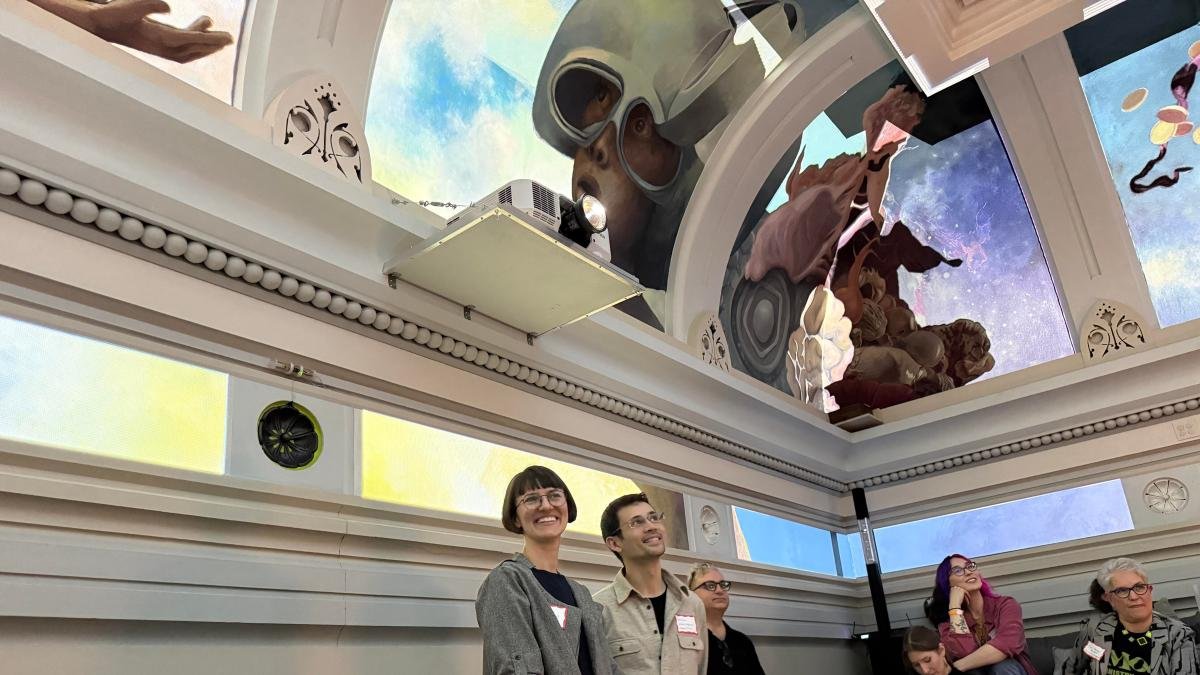
Spatial Pixel’s team in the room they helped design.
Scott Stein/CNET
The collaboration between Saligman and the Spatial Pixel team began in their shared Philadelphia neighborhood. The installation runs on Procession, an open-source platform developed by Spatial Pixel that coordinates multiple AI models within a physical environment. Although the team maintains a dedicated testing lab at the School of Visual Arts in New York City, the Ministry of Awe serves as their primary public proving ground.
“Much of our work involves finding ways of changing the mural, or the way that you see the mural through light. A core way we’ve been trying to allow visitors to interact with it is to pick up on the things that they’re saying in the space,” Whitney explained. “We want to take the things they’re saying and change the mural based on their words and what they point at.”
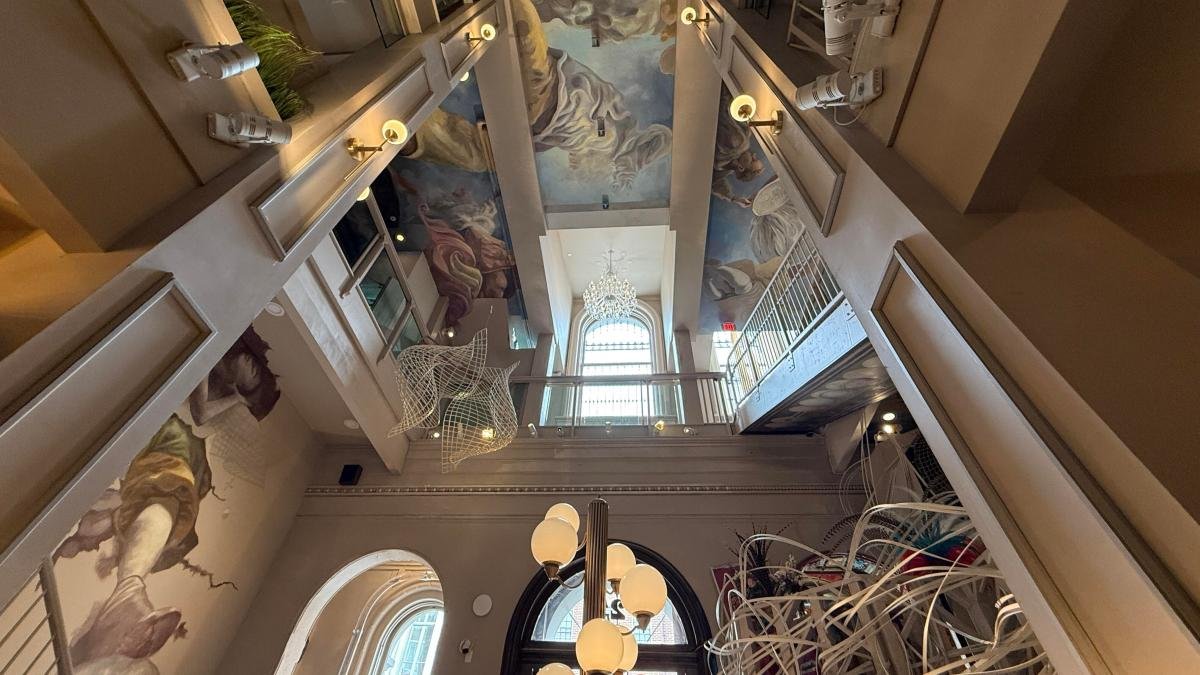
The Ministry of Awe’s multilevel former bank building has many rooms inside, many of them interactive, and they were designed differently by different artists.
Scott Stein/CNET
Creating a Perpetual Dialogue with the Artist
Currently, these interactive elements remain fleeting; projected words fade and hand highlights disappear shortly after they are made. However, the installation plans to lean further into its banking theme by securely archiving visitor contributions. With proper user consent, these stored interactions could serve as a conceptual “data bank” that Saligman can review to continuously update and evolve the physical space over time.
“Our goal is eventually to record what the people are contributing, with the right consent. But then maybe those ideas become like this bank. It is a bank, after all, to store these ideas, and then Meg can use them and review them and use it to evolve the painting and physical space. And so it becomes this sort of perpetual dialogue with the muralist,” Martin noted.
This experimental approach raises critical questions about creative agency and artistic ownership in the age of automation. Observing the exhibit while wearing smart glasses highlights how current consumer AI products often overlook these delicate ethical boundaries.
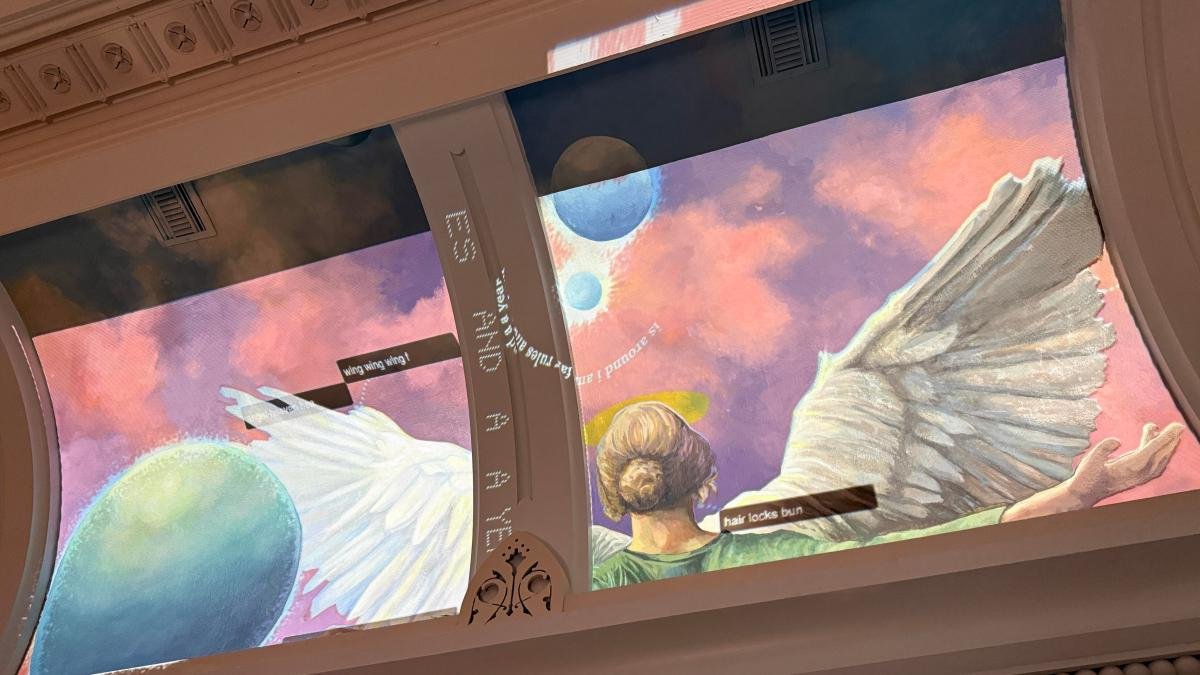
Words overlay with art, depending on how you interact. The work changes slightly over time.
Scott Stein/CNET
“What if you could actually talk to a painting? What if you could actually interact with a work of art and then explore it in new ways?” Martin added. “We realized that accessing these tangible computing techniques, like being able to recognize gesture, move objects around — there’s certainly a lot of academic groups that are discussing this, but it’s still really inaccessible to the actual designers that want to make experiences in that way.”
By removing the need for personal wearables entirely, public art spaces like the Ministry of Awe may offer the ideal blueprint for the future of human-technology interaction, demonstrating how technology can serve art rather than overshadow it.