


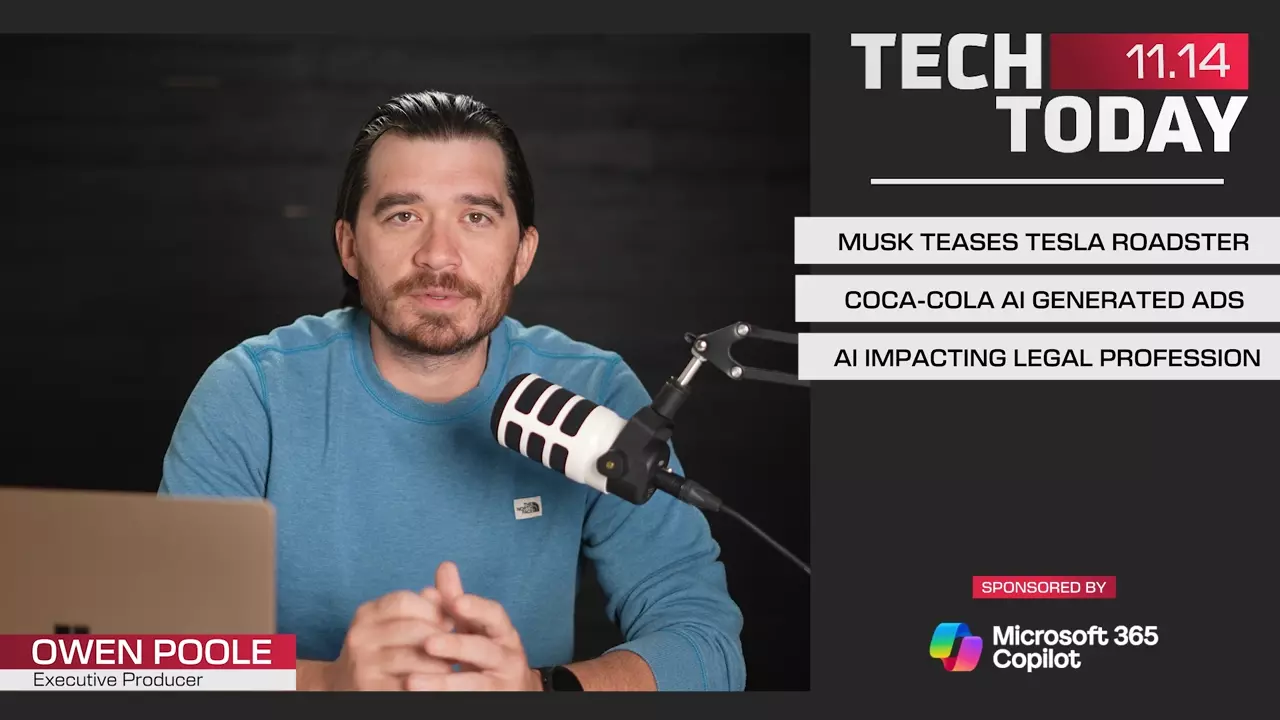
On November 14, 2025, the tech landscape experienced a massive paradigm shift as Tesla increasingly prioritized humanoid robotics over traditional electric vehicles, Coca-Cola debuted its first fully AI-generated holiday commercial, and legal systems globally struggled to regulate the rapid integration of artificial intelligence in courtrooms.
Tesla’s New Priority: Humanoid Robots Take Center Stage
Tesla is undergoing one of the most significant strategic transitions in its history. While the company built its reputation on leading the electric vehicle market, executive focus has officially shifted toward artificial intelligence and robotics. The development of the Optimus humanoid robot is no longer a side project; it has become the cornerstone of Tesla’s long-term valuation strategy.

Industry analysts point out that as global EV competition intensifies, particularly from lower-cost Chinese manufacturers, Tesla is leveraging its autonomous driving software, Full Self-Driving (FSD), to power physical robots. These machines are designed to perform repetitive factory tasks before eventually entering the consumer market for domestic use.
The Economics Behind the Robotic Shift
Investors are closely watching this pivot. Humanoid robots represent an untapped multi-trillion-dollar market. By deploying Optimus robots within its own gigafactories first, Tesla aims to prove the commercial viability and operational efficiency of its hardware, offsetting slower-than-expected growth in automotive deliveries.
Holidays Reimagined: Coca-Cola’s AI-Generated Campaign
In the advertising sector, Coca-Cola has made a historic move by utilizing generative artificial intelligence to recreate its iconic “Holidays Are Coming” campaign. The beverage giant used advanced AI video generation models to render the classic festive red trucks, snowy landscapes, and joyful crowds without traditional live-action filming.
Efficiency Versus Artistic Authenticity
This technological leap highlights a growing trend among major brands looking to reduce production times and costs. By utilizing generative AI, Coca-Cola was able to scale and customize the ad campaign for different global markets in a fraction of the time usually required. However, the move has sparked intense debate within the creative industry regarding the future of human artists, directors, and actors in commercial production.
The Legal Frontier: How AI Is Reshaping the Law
Artificial intelligence is not just transforming manufacturing and marketing; it is also fundamentally disrupting the legal profession. Courts, law firms, and corporate legal departments are grappling with the ramifications of AI-driven research, automated contract drafting, and predictive justice tools.
Regulatory Challenges and Ethical Dilemmas
While AI tools can analyze thousands of legal precedents in seconds, they have also introduced critical risks, including “hallucinations” where software fabricates case law. Judges across the United States are now implementing strict rules requiring attorneys to disclose whether AI was used to draft legal briefs, aiming to preserve the integrity of the judicial process as the technology continues to evolve rapidly.